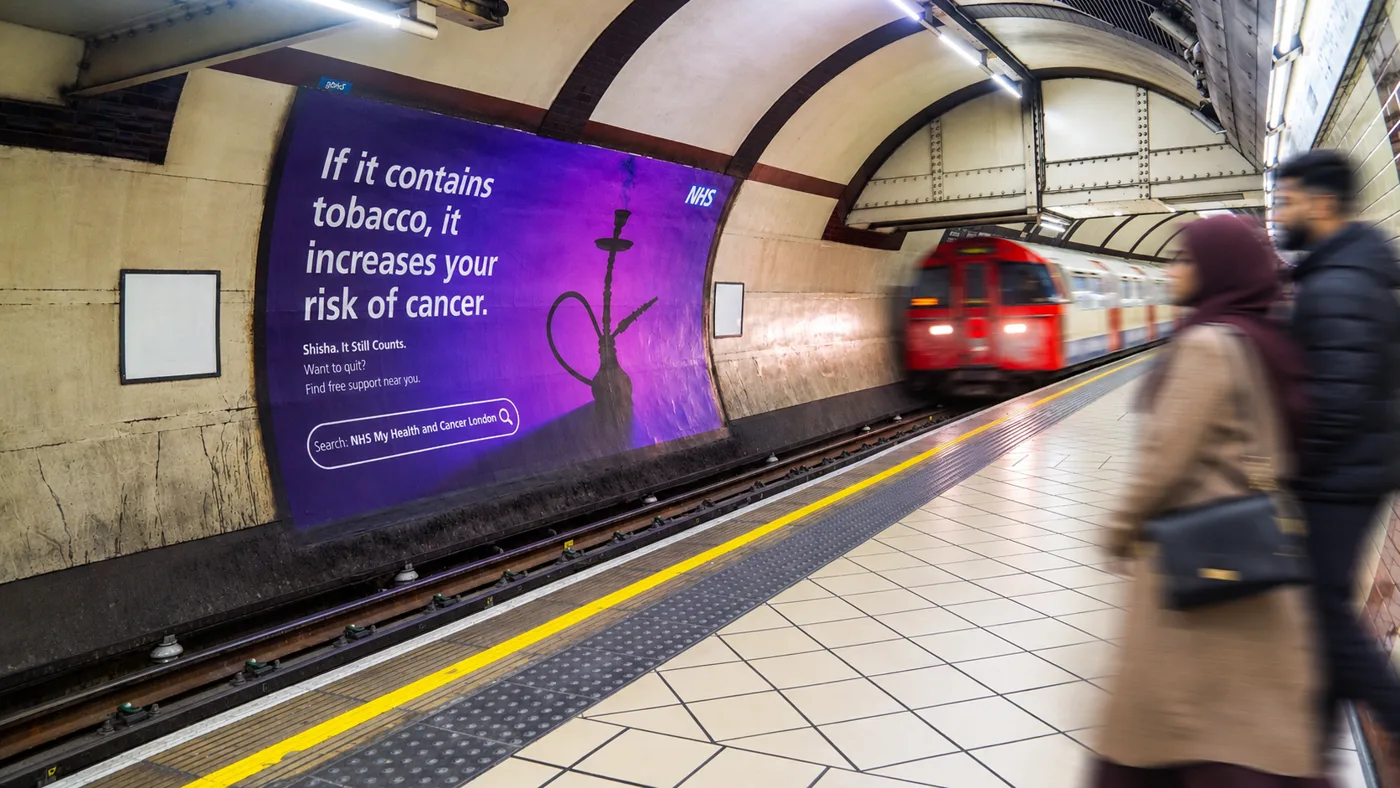

An NHS campaign running until March 2027 says shisha, paan and chewing tobacco all raise cancer risk. People who live or work in Sutton can get free quit help.
Shisha, paan, chewing tobacco and cigars carry a cancer risk just as cigarettes do, and a new NHS campaign running across south west London until March 2027 sets out to make sure people know it.
It Still Counts was launched on 11 November by RM Partners, the NHS cancer alliance for north west and south west London, with support from Cancer Research UK. Its message is short: “If it contains tobacco, it increases your risk of cancer.”
The alliance says the campaign includes what are set to be the first NHS takeovers of London Underground stations, at Edgware Road in Westminster and Wembley Central in Brent during November 2026. In Sutton it will show up closer to home: the campaign’s community toolkit says it will run across all 14 boroughs of north west and south west London on bus shelters, social media and search engines, from November 2026 until March 2027.
Corrected 12 November: the Underground station takeovers are at Edgware Road and Wembley Central only, during November.
What the campaign is saying
RM Partners says the aim is to “challenge misconceptions around tobacco use” and to make clear that every tobacco product carries a cancer risk. The campaign page lists the forms people often do not count as a cancer risk: shisha, cigars, bidis, gutkha, naswar, chewing tobacco and some forms of paan.
Susan Sinclair, managing director of RM Partners, said: “We want to make sure everyone is aware of how to reduce their cancer risk, and so we’re making cancer awareness part of everyday life. Tobacco comes in many different forms including cigarettes, pipes, shisha, chewing tobacco and paan and there are no safe ways to use tobacco. Smoking tobacco is associated with many types of cancer.”
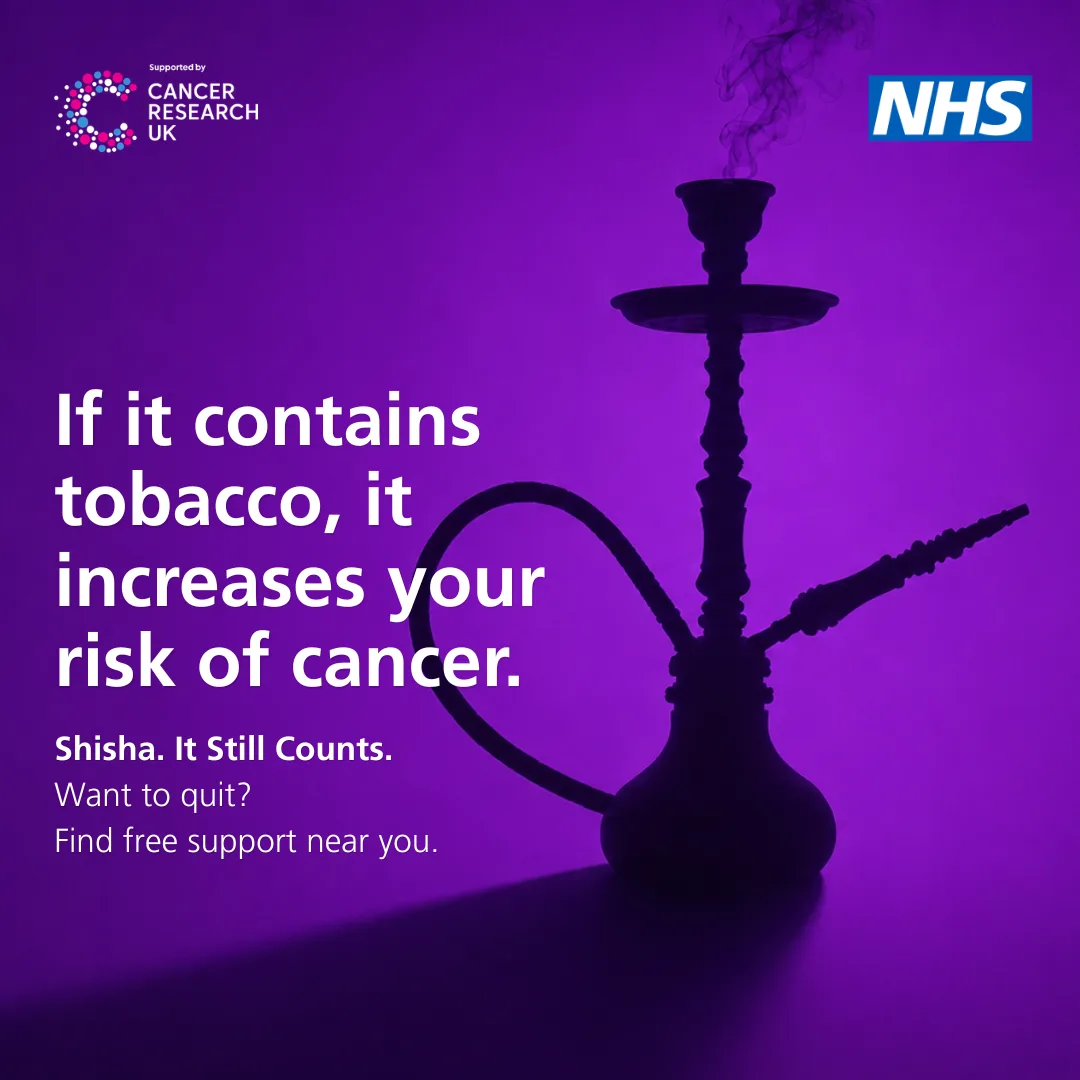
The campaign page says research has shown a 45-minute shisha session can mean inhaling as much smoke as 100 cigarettes, and that second-hand shisha smoke exposes people nearby to carbon monoxide and cancer-causing chemicals. It names the cancers involved: shisha and other smoked tobacco can cause cancers of the mouth, throat, lungs, stomach, liver and bladder, while chewing and other smokeless tobacco can cause cancers of the mouth, food pipe and pancreas.
The release cites the International Agency for Research on Cancer, the World Health Organization’s cancer agency, for the finding that smoking tobacco, shisha and bidi included, is linked to at least 16 types of cancer, among them lung, mouth, throat, oesophageal, bowel and pancreatic cancers. Citing Cancer Research UK, it adds that smoking is the leading preventable cause of cancer in England.
Why the NHS wants your GP to know
Dr Geetali Sharma, a GP and RM Partners’ primary care clinical cancer lead, said many people do not realise what they use counts: “Many people are unaware that some forms of tobacco can increase the risk of cancer and other health problems. Keeping your GP practice informed about any tobacco products you use helps ensure your health record is accurate and allows us to offer the right support at the right time.”
The campaign was designed with two community organisations, Mehr Health CIC and Amanah Health and Wellbeing, and RM Partners says 27 organisations will be running campaign activity through the month. GP practices, community pharmacies and dental services will also take part, linking people to local help to quit.
Sasan Shekarestan, director of Mehr Health CIC, explains in the toolkit why asking “do you smoke?” misses people: “Within the communities I work with, naswar and shisha carry no stigma and are often seen as a normal part of everyday life. As a result, many people do not mention it when asked if they smoke because they do not view it as the type of tobacco the question refers to.”
The campaign has also made a short film:

What it means for you
Help to quit in Sutton is free. Anyone aged 16 or over who lives or works in the London Borough of Sutton can use the Sutton Stop Smoking Service. There is no referral needed: you walk into one of the borough’s participating pharmacies, which are listed on the council’s quit smoking page. An adviser helps you set a quit date and sees you at agreed intervals for 12 weeks, and nicotine replacement such as gum, patches, lozenges and sprays is available at prescription cost, or free if you are exempt from charges.
If you use shisha or chewing tobacco, ask. The campaign page says local services support cigarette smokers and “may also support” people who use shisha or smokeless tobacco, and that this varies by area, so contact the service to check what it offers. Your GP practice, pharmacy or dentist can also help. The free Smokefree app builds a quit plan for cigarettes, shisha and other tobacco.
Know the symptoms. The toolkit asks anyone who uses any form of tobacco to contact their GP practice if a symptom does not go away. Among those it lists:
- a cough lasting more than three weeks, shortness of breath, chest pain or repeated chest infections
- coughing up blood, which needs urgent advice if you are 40 or over
- a hoarse voice that does not improve, a lump in the neck, or a sore throat or difficulty swallowing that persists
- pain when swallowing, or indigestion or heartburn that persists, especially with weight loss
- unexplained weight loss or loss of appetite
- bleeding from your bottom, blood in your poo, or a change in your bowel habits
Campaign materials, including posters in other languages and conversation starters for community groups, can be downloaded from the It Still Counts page.
Have your say